



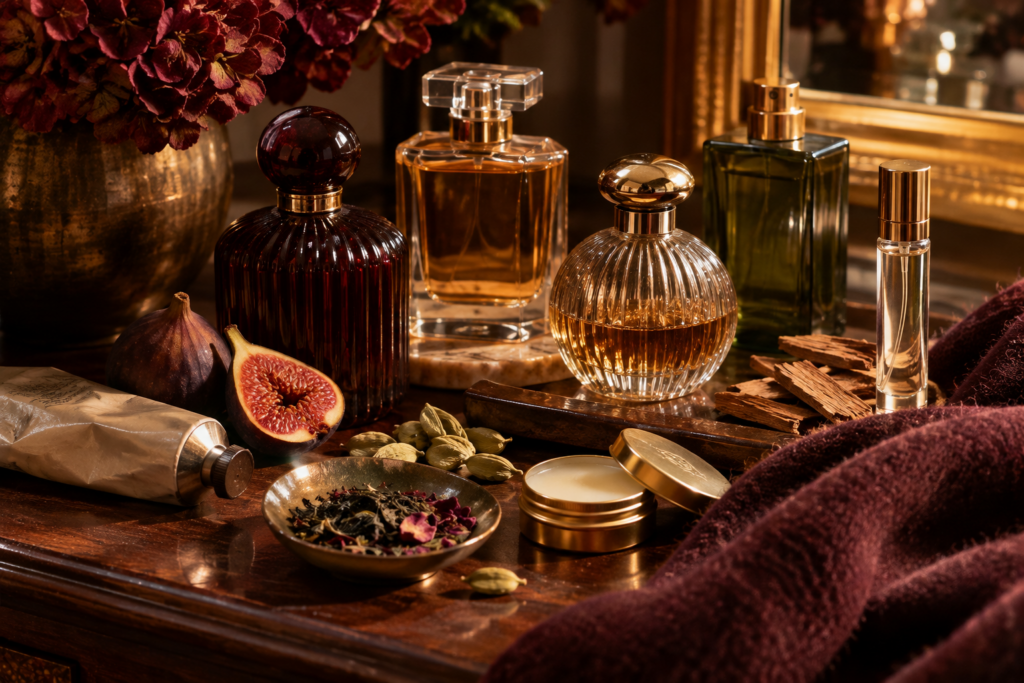
For most of the twentieth century, fragrance was treated like an invisible calling card. You chose a bottle to announce something to the room before you spoke—glamour at a dinner party, crisp authority in an office, romance across a bar. Magazine advice urged adults to locate one lifelong signature scent and wear it faithfully until friends associated the smell of a coat or scarf exclusively with you.
Lately, that old social contract has dissolved. Fragrance has moved three feet inward. Rather than dressing purely for an audience across the table, people are increasingly choosing scent as an everyday mood tool—sprayed at a desk on a grey afternoon, pressed onto wrists before opening a book, or misted lightly after an evening shower simply to shift how the air around them feels.
The shift makes complete sense once you pay attention to how modern days actually unfold. When work, rest, solitude, and social life share the same twenty-four hours, perfume stops being an evening costume and becomes portable atmosphere.
The End of the Single Signature Scent
Ask someone today what their signature scent is, and you are far more likely to hear a small rotation than a single answer. The fragrance wardrobe has quietly replaced the one-bottle loyalty test. You might wear sharp neroli, bitter orange, or green tea when you need mental clarity at nine in the morning, switch to smoky cedar or dry vetiver before heading out to dinner, and reach for warm skin musk or soft sandalwood late at night.
Even the old seasonal rules have broken down. People routinely wear rich, resinous ambers in high summer and crisp citrus in the middle of winter. Climate control, travel, and flexible schedules blurred the calendar; more importantly, when fragrance serves emotion rather than etiquette, you wear whatever temperature of scent your head needs that morning.
Why Scent Works Faster Than Thought
There is a straightforward biological reason perfume outperforms almost every other quick mood shift. Smell is wired directly to the brain’s emotional and memory centers, bypassing the rational filtering that slows down sight and sound. Before you have consciously analyzed a top note, your nervous system has already reacted to it.
That is why mood-driven perfumery has grown so naturally out of everyday life. A sharp twist of petitgrain and bergamot cuts through mid-afternoon fog far more gracefully than a third espresso; warm hinoki wood and black tea steady an overheated evening. Good perfumers compose for focus, calm, warmth, or bright lift—not through flat spa sprays, but through real, layered fragrances with edge and character.
Wearing Perfume in Private
One of the clearest signs that fragrance has turned inward is where and when people use it. Alongside classic eau de parfum, there is growing affection for intimate formats made for small, unglamorous moments: scented hand creams, solid balms slipped into coat pockets, hair mists, and low-projection skin scents meant to linger close rather than trail down a staircase.
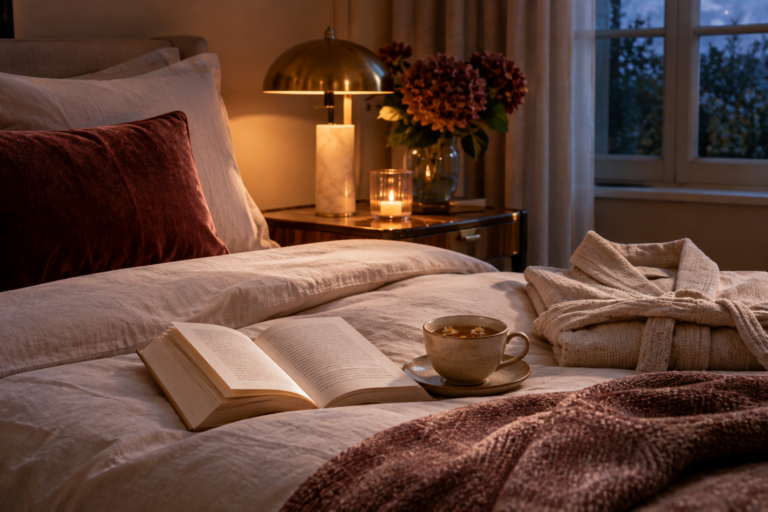
There is something quietly civilized about putting on a favorite perfume before spending an evening alone. It marks a boundary inside your own routine—signaling that the workday is finished even if nobody else is walking through the door. Instead of waiting for a restaurant reservation to open your best bottle, you allow ordinary mornings and quiet nights to smell good too.
Growing Up Beyond Sugar: The New Notes
As fragrance turned personal, its flavor profile matured right alongside it. The loud, syrupy sweet scents of a decade ago—spun sugar and overwhelming synthetic vanilla—have largely given way to textured, savory, and adult compositions.
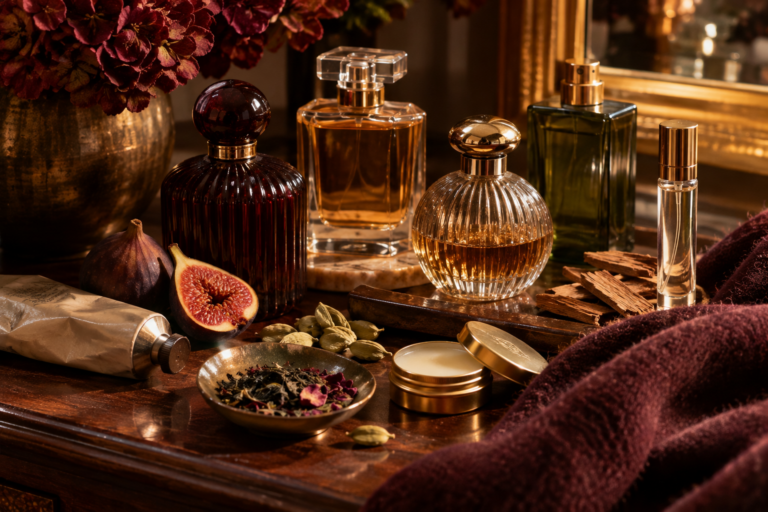
The most compelling bottles today lean toward bitter espresso, toasted pistachio, warm milk, dried fig, steamed rice, cardamom, and tart, realistic fruits anchored by dry cedar, mineral musk, or earthy moss. Tea notes and herbal woods feel especially right in close quarters. They smell lived-in rather than theatrical—like wearing fine wool instead of sequined polyester.
Choosing a Scent Without the Department-Store Rush
Buying fragrance as a mood tool requires slowing down the way you test it. Nobody ever learned what a perfume truly feels like by sniffing three paper blotters under bright fluorescent lights in ten minutes.
Start instead with discovery sets or travel vials, and ignore the gendered dividing lines that have always made little sense outside marketing meetings. Wear one scent for an entire day before deciding anything. Notice how it behaves after the bright opening evaporates—whether the heart calms you at hour three, whether the base feels comforting on a wool collar at hour eight. The goal is no longer finding the loudest compliment-getter in the room; it is finding two or three compositions whose company you genuinely enjoy for eight hours straight.
Portable Atmosphere
Once you build even a modest two- or three-bottle rotation, fragrance becomes one of the lightest, smartest things you can pack or keep in a bag. A small rollerball or solid perfume turns an anonymous hotel room, an overnight train compartment, or a rainy commute into familiar ground within seconds.
It also restores an element of private pleasure to getting dressed. Even on a day when your outfit is purely practical—dark jeans, an old coat, sensible boots—a great scent pressed to the collarbone adds wit and presence that nobody else needs to comment on for it to work.
Perfume used to ask a question about how others saw you: What does this say when I walk past? Today, the better question is simpler and far more rewarding: How does this make me feel while I’m wearing it? When scent answers that question first, every bottle on your shelf earns its place—not as a dress code, but as a quiet daily pleasure within arm’s reach.