






We all know the standard kids’ menu before the waiter even hands it over: three dry chicken tenders, plain pasta with butter, or a tiny cheeseburger stripped of anything green, served next to a juice box and two broken crayons.
Somewhere along the way, restaurants and parents decided that kids can only handle bland, beige food—and need to be kept far away from real cooking. Yet look outside a narrow slice of chain dining, and that idea falls apart fast. Children in Tokyo eat grilled fish and pickles for breakfast. Kids in Bologna grow up eating rich ragù and greens. Young diners in Mexico City squeeze fresh lime over smoky tacos without thinking twice. Kids’ menus aren’t bland because children require it; they are bland because nobody expects them to enjoy anything better.
Skipping the kids’ menu doesn’t turn dinner into a battle. Most of the time, it makes eating out cheaper, livelier, and far more enjoyable for the adults paying the bill.
Why Separate Kids’ Food Makes Pickier Eaters
Setting a separate, simplified plate in front of a child sends a clear message before the first bite: adult food is strange, complicated, and probably not for you. Worse, typical kids’ menu food is built to be soft, salty, and completely predictable, which trains young palates to pull away from sour, herbal, charred, or unfamiliar flavors.
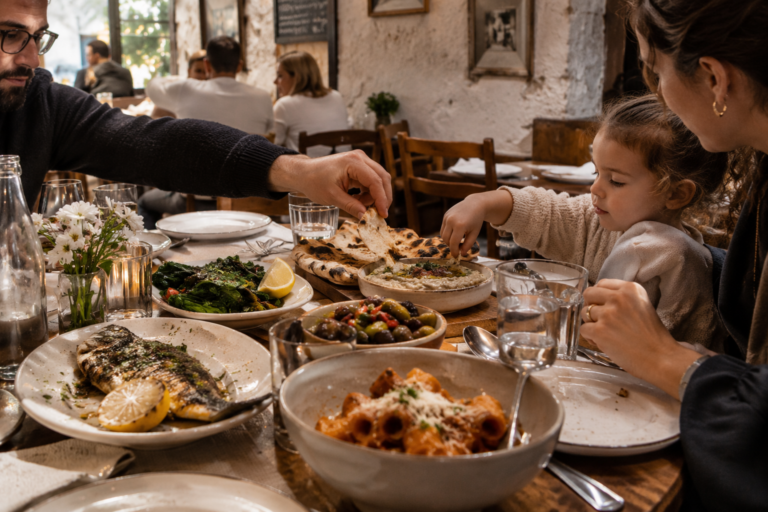
When kids eat from the same menu as everyone else, curiosity usually beats suspicion. A child who ignores steamed vegetables sitting beside chicken nuggets will often reach straight for roasted broccoli or crisp potatoes in the middle of the table simply because everyone else is eating them. There is no pressure, no performance, and no divide between real food for grown-ups and plain filler for kids.
Order for the Middle of the Table
The easiest way to drop the kids’ menu is to pick restaurants made for sharing—or treat a regular menu as dishes meant for the center of the table.
Trattorias, tapas spots, dumpling houses, Mediterranean restaurants, and busy neighborhood bistros work brilliantly for families. Instead of locking a child into one big plate they might barely touch, order three or four dishes to pass around: warm flatbread with dips, crispy potatoes, simple grilled fish or chicken, greens with lemon, and a bowl of good pasta or noodles. Every kid finds two or three things they happily eat right away, with tastes of something bolder sitting a few inches away. Even if they mostly stick to bread, olives, and half a portion of roast chicken, they are eating real food at a real table.
Pick the Right Room—and Go Early
Good restaurant nights with children have very little to do with strict manners and almost everything to do with picking the right place and timing. Nobody wants to shepherd a restless seven-year-old through a quiet, two-hour tasting menu where waiters whisper over every course.
Look instead for rooms with energy, warmth, and fast kitchens. Busy brasseries, tiled noodle shops, casual wine bars that open early for dinner, and lively taverns already have enough natural background hum that a loud laugh or dropped fork blends right in. Going early—sitting down at five-thirty or six rather than eight—changes the whole evening. Kitchens move quicker, servers aren’t slammed yet, tired kids haven’t hit their limit, and you wrap up just as the late crowd starts walking in.
Keep Hands Busy Without Handing Over a Phone
The automatic move whenever kids get restless at a table is to slide a phone across to them. It buys twenty minutes of quiet, yet it cuts kids completely out of the meal—and teaches them that going out to eat is mostly a chance for extra screen time.
A few small habits keep the table engaged without a screen. Order something quick that lands within three minutes of sitting down: bread with salted butter, olives, radishes, or crispy snacks give impatient hands something to do right away. Slip a small notebook, a pen, or a deck of cards into your bag before leaving home. Just as helpful, treat kids like real guests—let them read part of the actual menu, ask the server a question, or pick a dessert for the table to share. Most kids rise to the occasion when treated like they belong in the room.
One Taste, No Lectures
Skipping the kids’ menu only works if parents leave the nutrition lectures at home too. A restaurant table isn’t the place to bargain over finishing vegetables. Let kids try small bites from adult plates with zero pressure to love everything right away. If they push away grilled sardines or peppery salad tonight, let it go and pass the bread—six months later, they will probably grab another bite when nobody is making a fuss about it.
One of the best parts of eating out as a family is watching kids discover what actually tastes good—the night crispy duck skin beats plain fries, or the afternoon they realize garlic clams and sourdough are worth fighting over. Raising good dining companions doesn’t take etiquette lessons. It starts the evening you hand back the plastic kids’ menu, put a real dish in the center of the table, and let them eat with everyone else.