


Category Archives: HOME

Honest Materials: Why Linen, Stone, and Unfinished Wood Age Better

Walk into a showroom and everything looks engineered to resist time. Dining tables gleam under mirror-like coats of lacquer, engineered stone countertops imitate marble without a single pore, and synthetic upholstery promises to repel every drop of red wine ever poured. On day one, the effect is immaculate. Five years later, it is often depressing.

That is the quiet paradox of modern interiors: materials designed never to change usually age the worst. A polyurethane coat eventually clouds, chips, or peels, leaving an unsightly scar that cannot be patched without stripping the whole piece. Faux-stone laminate looks flat the moment a corner lifts. Polyester velvet flattens in the spots where people actually sit. Because those surfaces rely on perfection for their appeal, the smallest flaw feels like failure.

Honest materials work by an entirely different logic. Linen, natural stone, and unfinished or lightly oiled wood do not pretend to be immune to the people living alongside them. They soften, dull, darken, and record small histories—and in doing so, they become easier to live with, not harder.

The Difference Between Wear and Patina

The distinction between something looking worn out and something developing patina comes down to what sits beneath the surface. Synthetic finishes are usually skins stretched over unrelated cores. Scratch a high-gloss veneered cabinet and you expose particleboard; chip a coated metal handle and bright plastic or dull alloy peeks through. The object has no depth to fall back on.

Solid, minimally processed materials are the same all the way through. When a knife slips across an oiled oak tabletop, it reveals more oak. When a clay pot scuffs a honed limestone sill, it leaves a pale mark in real stone rather than tearing a printed film. Because the material is structurally consistent, age distributes across it evenly instead of isolating itself into ugly blemishes.

In older European cafés and country kitchens, the appeal rarely comes from pristine craftsmanship. It comes from zinc bars softened by decades of glasses, beechwood tables worn pale in the center, and stone steps hollowed slightly down the middle. None of those surfaces looked their best the week they were installed. They needed friction, daylight, and use to settle into themselves.

Linen and the Pleasure of Softening

New linen often surprises people who have only known combed cotton or synthetic blends. Straight off the loom, good heavyweight flax can feel crisp, dry, almost papery. Its beauty lies in what happens next.

With every wash and every season of sun, linen’s long plant fibers relax. A crumpled linen duvet cover or a pair of unbleached curtains begins with a gentle architectural stiffness, then gradually falls into heavier, softer folds. Unlike synthetic textiles—which accumulate static, pill along seams, and hold onto odors—linen breathes, drapes loosely, and gains a muted luster over time.

It also brings an understated honesty to light. Heavy linen curtains do not block a window like vinyl blinds or stiff lined polyester; they filter daylight, letting the faint weave and natural slub of the yarn show through. Even wrinkles work in linen’s favor. Pressed to a razor crease, it misses the point. Left slightly rumpled on a dining table or sofa slipcover, it signals ease—a home built for actual meals and afternoon naps rather than photography.

Stone Without the Sealant Anxiety

Few materials divide homeowners as sharply as natural stone. People admire marble, travertine, and soapstone in old buildings, then talk themselves into shiny, resin-bound engineered quartz because they fear etching and staining.

That anxiety almost always stems from polished finishes. When stone is buffed to a glossy mirror, every water spot, faint ring from a wine glass, or dull patch left by lemon juice stands out sharply against the shine. It turns a kitchen into an obstacle course.

Honed or leathered stone behaves differently. Left matte rather than glass-smooth, marble, limestone, and soapstone absorb light softly and feel warm, almost chalky under the hand. In a honed finish, faint acid marks and tiny scratches are not catastrophes; they blend gradually into an even, velvety surface. Soapstone, long used in laboratories and historic New England hearths, darkens slowly to deep charcoal with a touch of mineral oil and shrugs off heat altogether. Even porous travertine, with its tiny pits and earthy banding, feels grounded precisely because it never looks sterile.

Unfinished and Oiled Wood

Somewhere in the late twentieth century, heavy polyurethane varnish became the default shield for domestic timber. It promised zero maintenance, and in exchange, it turned warm oak, walnut, and ash into something visually indistinguishable from plastic. Under bright light, thick lacquer catches a cold glare and seals off the very texture that makes wood pleasant to touch.

Unfinished, oiled, waxed, or soap-treated wood keeps its pores open. Run your fingers across an oiled ash bench or a Scandinavian soap-washed pine floor and you feel the grain directly—cool in summer, surprisingly warm underfoot in winter. Over the years, sunlight deepens pale timbers into honeyed tones, while oiled surfaces gain a quiet sheen simply from hands brushing past chair arms and tabletops.

Just as importantly, honest timber finishes can be repaired in minutes. A water ring on a lacquered table requires harsh stripping and refinishing. On an oiled oak table, five minutes with fine abrasive pad and a rag dipped in linseed or hardwax oil erases the mark completely. Care becomes episodic and calm rather than an all-or-nothing restoration project.

A Quiet Supporting Cast

Once you begin noticing how linen, stone, and untreated wood behave over time, it becomes natural to extend the same patience to smaller elements around a room. Materials tend to look best when they share a willingness to change at roughly the same pace.

Unlacquered brass hardware—cabinet pulls, tapware, picture lights—begins bright and metallic, then mellows within months into muted bronze wherever fingers touch it most. Raw terracotta pots develop faint mineral blooms as water evaporates through porous clay. Flat-woven wool rugs bounce back beneath heavy furniture legs in a way synthetic polypropylene fibers never manage, holding a dry, matte richness even in high-traffic hallways.

Put these together—a wool runner beside a soap-washed floor, an unlacquered brass lamp on an oiled timber desk, a linen shade casting warm light across a stone hearth—and the room acquires quiet depth. Nothing glares. Nothing looks brittle.

Living With Marks Without Losing Your Mind

Choosing materials that age naturally does require abandoning the fantasy of permanent newness. That adjustment can feel daunting at first, particularly if you have spent years wiping down glossy surfaces at the end of every evening.

In practice, living with honest materials is far less fussy than maintaining artificial perfection. The trick lies in choosing forgiving tones and realistic finishes from the start. Mid-tone oatmeal or flax-colored linen hides everyday dust better than optic white; honed, busier-veined marble disguises faint marks more gracefully than stark white slabs; rustic or character-grade oak welcomes the first fork dent so effortlessly that the second one goes unnoticed.

Once the first ring appears on a timber side table or the first crease settles into a linen sofa cover, the tension leaves the room. Guests stop hovering nervously with coasters. You stop policing how people use the furniture. The object crosses the threshold from showroom piece to companion.

Bringing Honest Materials Home Gradually

Embracing materials that age well does not mean gutting a kitchen or replacing everything you own. Even in a rental apartment filled with glossy landlord cabinets and synthetic flooring, small tactile interventions change how a space feels day to day.

A thick, unfinished maple or oak chopping board left permanently on a laminate worktop introduces real grain where your hands work most. Swapping synthetic curtains for unbleached linen immediately softens harsh daylight. A secondhand pine chest stripped of orange varnish and finished with matte beeswax becomes a grounding presence in a bedroom, while a simple honed travertine dish on an entryway console gives keys and loose change somewhere solid to land.

Over time, buying fewer things made from better, simpler substances proves more economical than replacing cheap imitations every few years. You pay once, look after it lightly, and let time do the rest of the work.


Most design advice treats a home as something finished the moment the last box is unpacked. Honest materials suggest the opposite: that a room is only half-made when it arrives, waiting for sunlight, meals, seasons, and daily habits to complete it. When linen softens, stone dulls into warmth, and timber deepens under your hands, age stops looking like damage. It starts looking like life—and no synthetic surface can imitate that.
How to Make a Small Home Feel More Expensive

There is a particular kind of apartment that lingers in the memory long after you leave it. Usually, it is not the largest home you have visited, nor the one filled with recognizable designer labels. It might be a narrow one-bedroom above a bakery, or a compact terrace house with a kitchen no wider than a hallway. Yet the rooms feel settled, composed, and quietly expensive.

That impression rarely comes from money alone. Small spaces are unforgiving of careless spending: cramming pricey furniture into a modest footprint often looks more anxious than furnishing simply and well. What creates a sense of luxury in a small home is coherence. When square footage is limited, every surface sits closer to the eye, and every decision carries more weight. Proportion, light, material honesty, and the discipline to leave space alone do far more work than a high-end receipt ever could.

Making a small home feel richer is largely an exercise in editing and noticing—learning to see why certain rooms feel calm and substantial while others, even costly ones, feel restless.

The Quiet Authority of Restraint

The fastest way to make a small home look provisional is to fill every corner. In tight quarters, it is tempting to compensate with narrow console shelves, tiny accent tables, and clusters of decorative objects on every ledge. Yet visual noise shrinks a room faster than dark paint or low ceilings.

Restraint reads as confidence because it suggests nothing is being forced. Leaving eighteen inches of bare wall beside a bookcase, or keeping a windowsill entirely clear, creates breathing room that registers as spaciousness. The same principle applies to color and finishes. A small apartment feels noticeably calmer when it speaks a consistent material language: two wood tones rather than five, one primary metal finish, and a tight palette of muted wall colors that carry from room to room without jarring contrast.

Consider the kitchen, often the busiest square meters in a compact home. Clearing the worktop down to three useful, handsome objects—an end-grain chopping board, a dark glass bottle of olive oil, a stoneware crock holding wooden spoons—changes the room immediately. Once appliances and packaging are put away, you notice the light on the splashback and the grain of the cabinetry rather than a queue of waiting chores.

Scale Over Square Footage

One of the enduring myths of small-space decorating is that small rooms require small furniture. Filling a compact living room with undersized pieces—a shallow loveseat, a postage-stamp rug, spindly side chairs—only emphasizes how little floor exists. It produces the visual effect of a waiting room.

Experienced interior architects often do the opposite: they anchor a modest room with fewer pieces, but allow those pieces real generosity of scale. A clean-lined three-seat sofa paired with one solid armchair gives a sitting room architectural poise. The eye rests on broad, calm shapes instead of hopping from leg to leg.

Textiles obey the same rule. A rug marooned beneath a coffee table cuts the floor into fragments; choosing a flat-woven wool or jute rug large enough to slip under the front legs of your seating pulls the arrangement together and makes the room feel wider. Curtains work similarly. Hanging a simple linen drape just below the ceiling rather than directly above the window frame—and letting it kiss the floorboards—draws the eye upward and lends a modest ceiling unexpected grace. Even inexpensive cotton or linen curtains look tailored when hung at full height and wide enough to clear the glass.

Lighting as Architecture

Nothing flattens an otherwise thoughtful room faster than a single overhead fixture washing every corner in cool, even brightness. Overhead glare eliminates shadow, and without shadow, a small room loses depth and begins to look two-dimensional.

Warm, layered lighting is perhaps the most persuasive tool available on any budget. Instead of relying on the ceiling rose, build pools of light at varying heights: a low ceramic lamp on a stack of books, a small pleated shade on a sideboard, a wall-mounted sconce beside a reading chair, or a soft paper pendant suspended low over a dining table.

Bulb temperature matters just as much as the lamp itself. Anything cooler than 2700K tips a room toward the clinical; warm bulbs between 2200K and 2700K flatter timber, soften paint, and make simple textiles look richer after dusk. Even an ordinary plaster wall gains quiet texture when grazed from the side by a low-wattage lamp.

Honest Materials and the Tactile Test

In a small home, you touch nearly everything you own. Doors open at arm’s length, curtains brush past your shoulder, and the dining table doubles as a desk. Because proximity is unavoidable, synthetic substitutes are quickly exposed. High-gloss laminates, thin polyester velvets, and faux-marble prints rarely age well; they catch light harshly and feel weightless to the hand.

Humble, honest materials carry far more authority. Unbleached linen, boiled wool, oiled oak, raw terracotta, stoneware, and brushed cotton have natural irregularity and weight. They absorb light gently and improve with wear. Texture can also replace ornament: a neutral room built from matte-painted walls, heavy linen curtains, a wool cushion, and an aged timber table never feels bare.

Thoughtful pairing makes all the difference here. An inexpensive birch or pine dining table looks composed beside sturdy secondhand bentwood chairs and heavy linen napkins. A modest sofa loses its generic quality once standard synthetic cushions are replaced with generously filled feather inserts wrapped in textured wool or washed linen.

The Small Details Everyone Touches

If a room’s broad strokes set the mood, its hardware determines how convincing the space feels up close. Builders routinely fit doors and kitchens with stamped chrome handles, brittle plastic switches, and hollow-core knobs. Because we touch them dozens of times a day, these small points of contact quietly define the standard of a home.

Replacing ordinary cabinet pulls with solid unlacquered brass, blackened bronze, or turned oak knobs is a simple afternoon project with outsized returns. Plain kitchen doors or an inexpensive chest of drawers immediately feel grounded and deliberate. The same holds for light switches: swapping glossy white plastic for brushed brass toggles or matte porcelain plates brings subtle permanence to the walls.

Small upgrades apply to presentation as well. Trading flimsy clip frames for simple oak or blackened wood frames with wide, warm-white mat board gives even a vintage postcard or exhibition poster genuine presence.

Objects With a Pulse

Rooms that feel genuinely expensive seldom look as though every object arrived in the same delivery. What separates a lived-in home from a showroom is character—pieces carrying a trace of handwork, age, or personal curiosity.

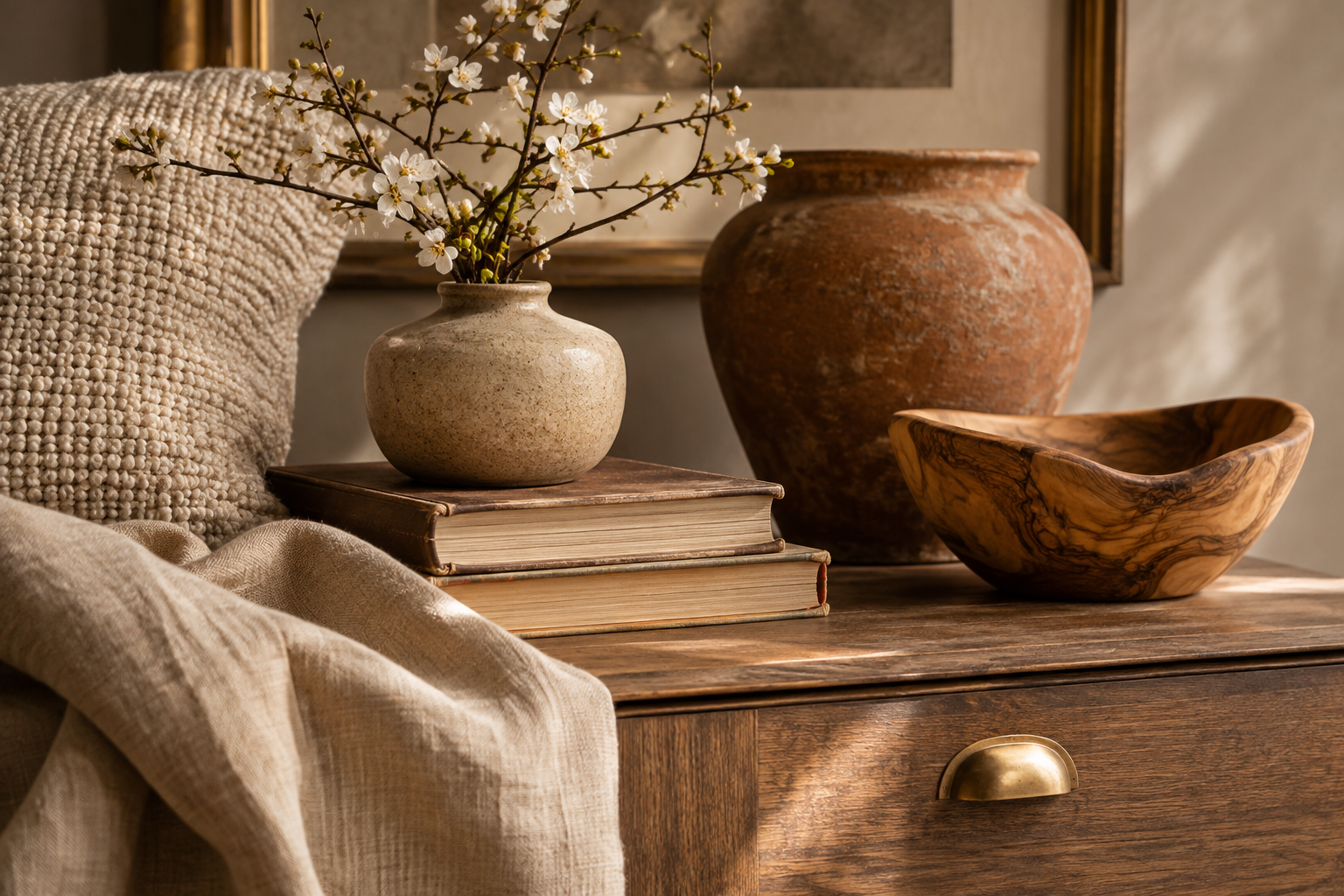
Books bring warmth and intelligence to small rooms when treated as living objects rather than props. Stacking them both upright and in short horizontal piles creates varied rhythm on open shelves. Mixing books with a few tactile pieces—a hand-thrown stoneware pitcher, a tarnished brass tray for keys, a carved olive-wood bowl—adds depth without crowding surfaces.

Art works best when chosen slowly and hung with restraint. A single charcoal drawing, textile, or framed photograph often commands a small wall with greater poise than a crowded grid of matching prints. Leave breathing space around each piece so it can actually be seen. When every object on a shelf has a distinct silhouette and a reason to be there, the room feels unmistakably personal.

Knowing Where to Spend—and Where Not To

Making a modest home feel refined does not require uniform spending. The secret lies in concentrating funds on the elements that carry physical weight or daily touch, while staying relaxed about simplicity elsewhere.

It is worth spending more on lighting fixtures and shades, natural-fiber rugs, solid hardware, one principal piece of seating with durable upholstery, and proper framing for art you plan to keep. Those anchors establish the baseline quality of the room and travel with you if you move.

By contrast, there is little need to overspend on simple shelving, side tables, dining chairs with good secondhand bones, or bedlinen—plain cotton percale or stonewashed linen in a single muted shade looks restful regardless of label. High-low mixing only falters when budget pieces imitate luxury poorly; when a simple, honest piece sits beside a tactile, well-made anchor, both benefit from the company.


A small home does not need to be disguised, nor does it require theatrical styling to earn admiration. Its real advantage is intimacy. When warm light falls across matte walls, curtains hang with unhurried weight, and the objects around you feel chosen rather than accumulated, square footage stops being the story. The room simply becomes a pleasure to inhabit—which remains the only definition of luxury that holds up once the door closes behind you.