





For the past decade, sleep has been marketed largely as a solitary optimization sport. It comes packaged with smart rings, temperature-controlled mattresses, blackout curtains, and morning readiness scores that grade your night like a quarterly performance review. In that version of rest, sleeping well is something you do quietly in the dark so you can outwork or outlast everyone else the next day.
What rarely gets mentioned is something far more human: sleep is what makes you good company.
When you are genuinely rested, you are funnier, quicker on your feet, warmer to strangers, and far more willing to say yes to a spontaneous dinner at eight o’clock. When you are running on five broken hours, even a pleasant evening feels mildly exhausting before the bread basket arrives. In a culture obsessed with status symbols, being consistently well-rested might be the rarest social luxury left—precisely because you cannot fake it for very long, and because everyone across the table can feel whether you have it.
The Myth of Functioning on Empty
Not long ago, surviving on minimal sleep was worn like a badge of metropolitan stamina. People boasted about late flights, midnight emails, and early workouts as though exhaustion proved importance. Yet the social cost of chronic tiredness has always been obvious in plain sight.
When you are short on sleep, your margin of grace disappears. Humor flattens, patience thins, and ordinary offhand remarks start landing sharper than they were meant. You do not become dramatically unpleasant after a short night; you simply lose ease. Small delays irritate you. Conversations require visible effort. You listen just well enough to plan your turn to speak, then quietly wish you were already home.
Why Exhaustion Is Quietly Contagious
Sleep does not stay inside the bedroom; it travels straight into how other people experience you. Walk into a room running on fumes, and people subtly feel the tension—just as they immediately relax around someone who appears calm, unhurried, and genuinely awake.
Protecting your rest is not anti-social retreat; it is social maintenance. Showing up to a Friday dinner, a museum afternoon, or a Sunday walk with a rested mind means bringing patience, curiosity, and real warmth into the room. Being well-rested is one of the quietest forms of generosity you can offer the people you spend time with.
How “Sleep-Maxxing” Ruined Rest
Of course, modern wellness managed to complicate even lying down in the dark. Somewhere between blue-light glasses and evening supplement stacks, rest acquired an anxious twin: checking a sleep tracker first thing in the morning and letting a low score sour your mood before the coffee has even brewed.
When rest turns into homework, it stops feeling restful. Lying awake calculating how many hours remain before the alarm—or worrying whether you achieved the right percentage of deep sleep—does the exact opposite of calming the mind. Good sleep should leave you feeling spacious, not graded.
Rested Energy Changes How You Spend a City
Notice what separates someone who enjoys their free time from someone who merely recovers from work. Rested people have appetite—not just for food, though everything tastes better when you aren’t overtired—but for small adventures. They take the longer walk home through an unfamiliar street. They linger for one more drink because the conversation is actually going somewhere. They stay sharp enough at a film or exhibition to talk about it afterwards instead of staring blankly at the credits.
Tired people, understandably, default to the path of least resistance: delivery food, passive scrolling, and turning down invitations by Thursday afternoon because the week already feels finished. Protecting sleep buys back your evenings and weekends. It turns leisure from low-battery recovery into actual living.
Building an Evening Life Without Turning Into a Monk
Treating sleep as a luxury does not require going to bed at nine-thirty every night or declining every late supper in town. Nobody wants to become the person who leaves a great table mid-sentence because a smartwatch demanded wind-down mode.
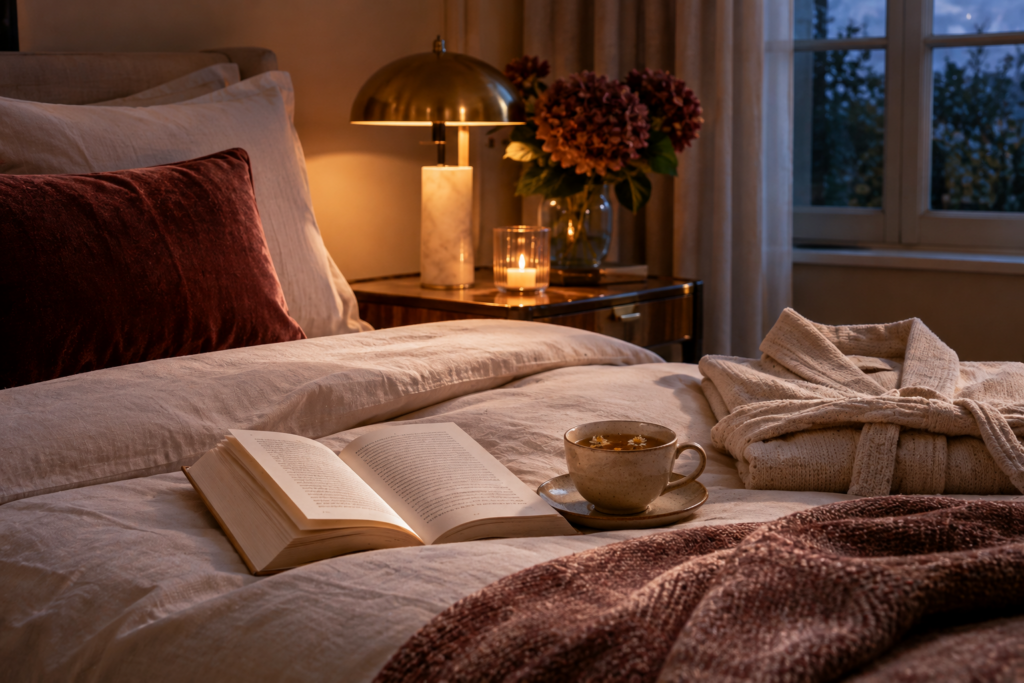
The secret is choosing your late nights deliberately rather than bleeding away four ordinary weeknights to meaningless distraction. Most people do not lose sleep to unforgettable parties; they lose it to thirty extra minutes of clicking through clips they will forget by breakfast. Guarding ordinary Tuesdays and Wednesdays—dimming the apartment lights an hour before bed, keeping the bedroom cool, putting the phone across the room, and reading twenty pages of something absorbing—creates a deep enough reserve that staying out past midnight on Friday feels effortless rather than catastrophic.
Equally helpful is dropping the obsession with nightly perfection. Sleep varies naturally across seasons, travel, and busy weeks. One thin night does not ruin a weekend unless you spend the whole morning mourning it.
Waking Up With Margin
There is an unmistakable physical luxury to waking up ahead of your obligations—without an alarm jarring you out of deep rest, without immediately reaching for caffeine to manufacture enthusiasm. You have time to shower properly, dress with care instead of grabbing whatever sits nearest the bed, eat breakfast sitting down, and step outside feeling genuinely present in your own skin.
That unhurried morning energy carries straight into how you treat people all day—baristas, colleagues, friends, and partners alike. You notice jokes faster. You give people the benefit of the doubt.
We tend to measure wealth in experiences, clothes, or places we can afford to visit. Yet the foundation beneath almost every good memory is far simpler: having the energy to be fully awake while it happens. Sleep is not hours stolen from living well; it is the quiet reserve that lets you show up for the people and pleasures waiting on the other side of morning.