


For a surprisingly long stretch, modern good taste was flattened into one remarkably cautious uniform. You knew it the instant you walked down any upscale city block: oversized oatmeal cashmere, puddle-hemmed cream trousers, immaculate beige trenches, tiny leather totes stripped of hardware, and hair scraped back neatly enough to suggest you never broke a sweat.
When “quiet luxury” first arrived, it made plenty of sense. After a decade of loud streetwear logomania, neon drops, and outfits engineered purely to stop thumbs on a phone screen, stepping back toward fabric, tailoring, and restraint felt genuinely refreshing. The trouble is what happens when restraint becomes mandatory. Somewhere along the way, dressing quietly stopped looking effortless and started looking mildly terrified—as if a single flash of bright color or unusual shape might expose you as someone without taste.
Unsurprisingly, people finally grew tired of the beige safety blanket. Across city streets and current collections, monochrome caution is stepping aside for richer color, firmer silhouette, and clothes that actually acknowledge the personality of the person inside them.
When Good Taste Turns Into Camouflage
The fatal flaw of late-stage quiet luxury was not simplicity; it was sameness. An aesthetic built on avoiding anything noticeable eventually turns into social camouflage. Everyone looks undeniably neat, moderately wealthy, and completely interchangeable.
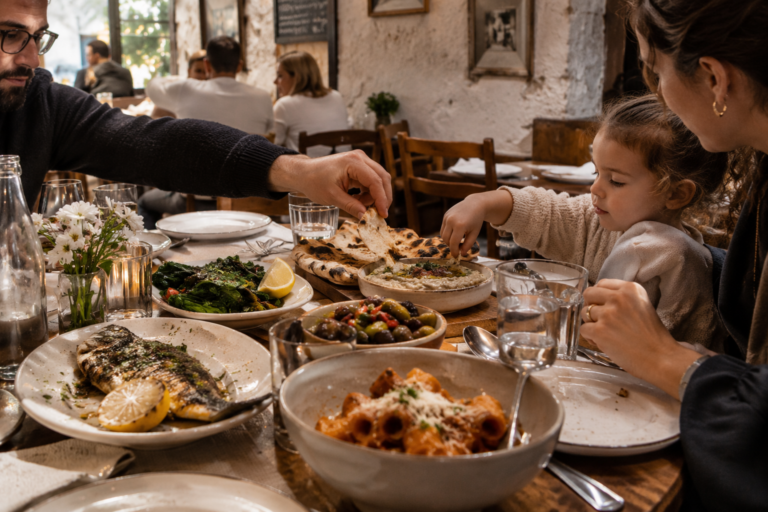
Personal style has never been about passing an inspection by wearing the safest shade of taupe. The most memorable dressers—from museum directors to effortless weekend regulars at a neighborhood bistro—usually carry one slight kink in the proportions, an unexpected pigment, or an object with a little wit. When an entire wardrobe is designed solely not to offend, you strip away the small surprises that make getting dressed interesting in the morning.
The Return of Rich, Unapologetic Color
Look closely at how dressing is shifting right now, and the temperature change is unmistakable. Instead of endless pale beige and grey, saturated, grown-up color is back in rotation—not frantic neon, though sharp cobalt blue, mustard, and cherry red have returned with real energy, but deep, moody pigments with visual weight.
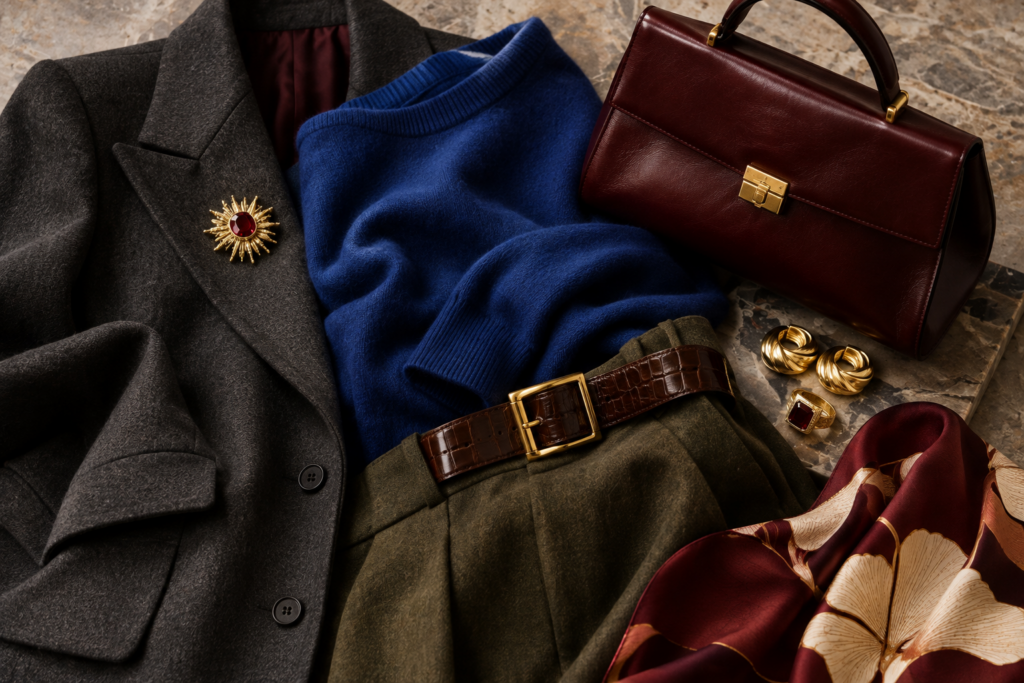
Think of rich espresso brown paired with red, deep oxblood and aubergine beside forest green, dusty mauve, cobalt, and muted teal. Dark jewel tones and saturated accents do something flat cream simply cannot: they give texture somewhere to live. A heavy wool coat in burgundy or deep bottle green carries every bit as much authority as camel, with twice the life in grey winter light. Even pairing classic navy or grey with one bold contrasting layer—a cobalt knit under dark tailoring, or warm ochre beside charcoal—wakes up an entire outfit without requiring a maximalist overhaul.
Silhouette With Backbone
Color is only half the correction. After years of shapeless slouch—drop shoulders, puddle hems, and oversized coats designed to swallow the wearer whole—silhouette is regaining architecture and intent.
Tailoring is leaning noticeably back toward structure: longline coats with strong, clean shoulders, sharper waistlines, fluid wide-leg trousers cut cleanly rather than dragging carelessly, and sculptural outerwear with crisp volume. On the softer side, skirts and dresses are rediscovering movement and fullness—pleats, gathered waists, and fluid hems that react when you walk.
Fabric weight drives all of this. A structured wool coat holds its line across the back and changes how you carry your head; a velvet blazer worn with fluid satin or crisp cotton trousers creates contrast you notice across a room. Clothes with real shape make the wearer look present rather than apologetic.
Collected Personality Over Prescribed Uniforms
Perhaps the clearest sign of how taste is evolving is the return of small, personal details alongside classic tailoring. Lace trims, ribbons, heavy contrast stitching, vintage brooches, bolder belts, and unexpected textures are slipping back onto clean silhouettes, making outfits feel collected over time rather than pulled from a minimalist starter kit.
None of this means abandoning good fabrics or sprinting back to giant logos. The real evolution is keeping quiet luxury’s respect for wool, silk, cut, and finish—and finally giving yourself permission to add romance, contrast, hardware, vintage finds, and humor back on top.
How to Wake Up a Neutral Wardrobe Without Overdoing It
If your closet currently leans heavily toward black, navy, grey, and sand, moving past quiet luxury does not mean replacing everything you own or dressing like a circus poster. In fact, a calm neutral foundation is the best possible stage for color and stronger shape.
Start with proportion first. Swap one droopy cardigan for a jacket with real shoulder structure, or adjust the length of a coat so it frames the rest of your outfit cleanly. Then bring in pigment through pieces that work hard: an oxblood leather bag or belt, a sharp cobalt cashmere crew-neck under a charcoal blazer, deep olive wool trousers with crisp white shirting, or one sculptural silver or vintage brooch pinned cleanly to a heavy lapel. One deliberate choice reads as point of view; five competing statements just read as noise.
Good style should never feel like a test you are trying not to fail. Quiet luxury taught people a useful lesson about looking at seams, fibers, and fit instead of buying shiny logos—and that part is worth keeping. Everything else, especially the fear of color, drama, and looking slightly unmistakable in a crowd, can happily stay behind.