


For a long time, staying home on a Friday night carried a quiet note of apology. Unless you were exhausted or broke, remaining indoors while the city hummed outside felt vaguely like missing the point of being young—or at least of having a social life. Yet somewhere along the way, the hierarchy shifted. Friday has stopped being an automatic sprint toward crowded bars and become something far better: the first evening of the week that genuinely belongs to you.
Still, there is an enormous difference between staying home by default and staying home on purpose. Most of us know the default version well enough. You close your laptop at six, change into something shapeless, heat up whatever happens to be in the fridge, and end up sideways on the sofa staring at a glowing screen until midnight. You rested, technically, yet wake up on Saturday feeling curiously flat.
That is why small, deliberate indulgences matter more than they look. They are not frivolous extras reserved for hotel vacations or birthdays; they are punctuation marks. Without them, workdays bleed straight into weekends without changing tempo. Turning an ordinary Friday night into a proper ritual—heat, scent, music, good skin care, unhurried touch—draws a clean line between obligation and pleasure.
Why Small Indulgences Change the Texture of a Week
Modern life is remarkably good at efficiency and remarkably bad at transitions. We move from spreadsheets to errands to dinner with the exact same brisk posture, treating our bodies mostly as vehicles that carry our heads from one task to another. Small indulgences interrupt that momentum.
Psychologically, spending ninety minutes on pure sensory comfort tells the nervous system that nothing else is required of you tonight. Practically, it stops you from saving all your pleasure for two annual holidays while letting fifty other Fridays evaporate into chores and scrolling. Luxury, at its most useful, is simply attention paid to how something feels—warmth against cold skin, oil pressed into tight shoulders, a room lit softly enough that your eyes relax.
Shifting the Room Before You Do Anything Else
A Friday night treat begins before the water runs. If the room still looks and sounds like three o’clock on a Tuesday afternoon, your brain will keep behaving as though emails are waiting.
Start with light and sound. Switch off overhead fixtures completely and light a single good candle—something grounded and atmospheric like cedarwood, fig leaf, smoked vetiver, black tea, or bitter orange rather than sugary dessert scents. Candlelight softens the edges of even the most ordinary apartment and removes the harsh glare that keeps the mind alert.
Next, choose music with some weight to it. Instead of leaving an algorithm to guess your mood, put on an actual album from start to finish: warm late-night jazz, Brazilian bossa nova, classic soul, or slow, melodic electronics played through a decent speaker rather than a phone. Music changes the pace of a room faster than any object in it. Within three songs, the posture of the evening shifts.
Deep Heat: The Sauna, the Electric Blanket, and the Long Shower
Nothing erases five days of hunched shoulders and screen fatigue faster than serious, unhurried heat. If you are lucky enough to have access to a sauna—or keep a foldable infrared sauna blanket tucked in a closet—Friday evening is its natural home. Twenty or thirty minutes of deep warmth forces a kind of physical surrender you simply cannot fake with herbal tea alone. Your pulse slows, your breathing deepens, and the mental static of the week thins out.
Even without a sauna, heat is easy to engineer. Turning on an electric blanket underneath crisp cotton sheets half an hour before you plan to climb into bed is one of life’s most underrated small luxuries. Slipping between preheated sheets after a hot shower feels almost absurdly comforting—warmth waiting for you, rather than your own body having to heat a cold mattress from scratch.
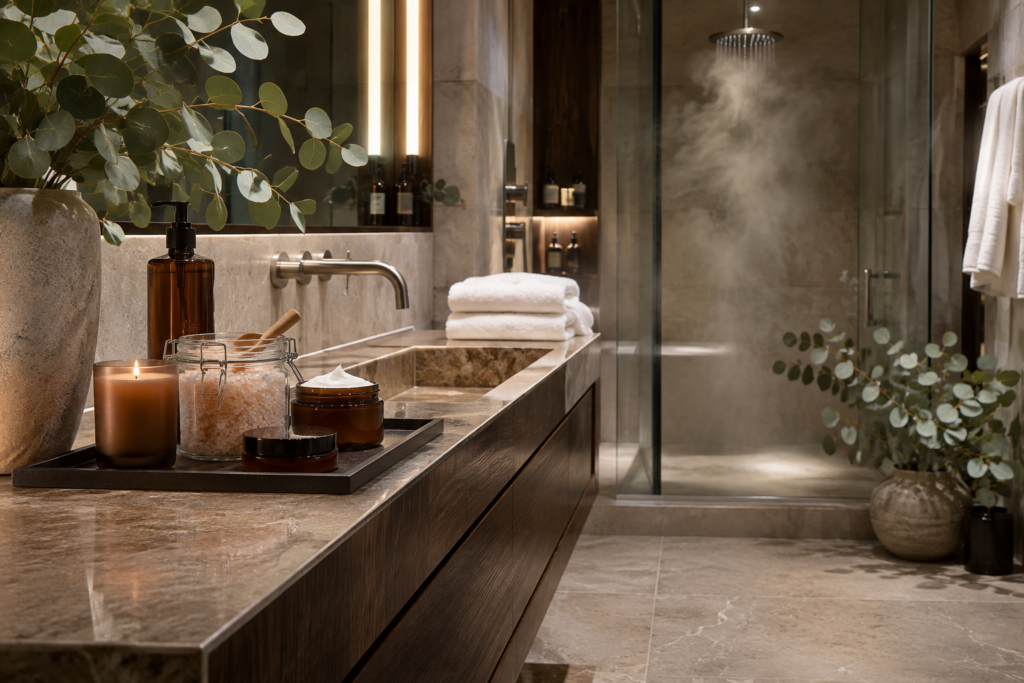
In the bathroom itself, treat steam as part of the setting. Shut the door, let the shower run hotter than usual for a minute, and drop a little eucalyptus or pine oil onto a corner of the floor out of the direct spray. Within seconds, an ordinary tiled bathroom turns quiet, fragrant, and enclosed.
Starting Fresh: The Quiet Satisfaction of Peeling and Cream
On weekday mornings, washing is pure logistics—three brisk minutes under the water while mentally rehearsing your schedule. Friday night asks for the opposite: touching your own skin slowly enough to notice it again.
A proper body peeling does something surprisingly restorative at the end of a week. Working a coarse sea-salt or sugar scrub mixed with almond, olive, or jojoba oil across warm, damp skin is deeply tactile. The grit wakes up circulation along sluggish legs and arms, removes the dry dullness left by central heating or office air, and turns rinsing off into a physical reset.
What follows matters just as much. Rather than toweling off impatiently and pulling on a T-shirt while half-damp, take five unhurried minutes with a rich body cream or warm oil while your skin still holds a trace of steam. Rubbing thick cream properly into shoulders, calves, elbows, and hands—not dabbing it on as an afterthought—seals in moisture and leaves you feeling genuinely cared for. It is hard to remain tense when your skin feels warm, heavy-scented, and smooth.
Touch Without an Agenda
If you share your Friday evening with a partner, this is where a home spa night stops being private maintenance and becomes quietly intimate. Adults spend an astonishing amount of time talking side by side while barely touching at all, or saving touch exclusively for rushed moments at the end of an exhausting day.
Trading ten or fifteen minutes of slow massage changes the dynamic immediately. Warm a generous amount of unscented or lightly herbal body oil between your palms and work carefully along the neck, the upper back, and the tight ridge between the shoulder blades. Keep phones in another room, keep the music low, and resist turning it into a favor with strings attached. Taking turns giving and receiving attentive, unhurried touch is one of the best free pleasures available—and it rarely fails to soften the whole weekend ahead.
If the evening is yours alone, solo massage still carries real merit. Working warm balm slowly into tired feet, tight forearms, and the base of your skull before pulling on thick wool socks accomplishes something stretching rarely does: it gets you cleanly out of your head.

Something Cold, Something Easy, Nothing Fussy
A good Friday night treat collapses quickly if it ends with forty minutes of washing pots and pans. Whatever you eat or drink afterwards should match the mood: simple, bright, and genuinely pleasurable without requiring performance.
After deep heat or a long shower, cold things taste extraordinary. Pour sparkling water over plenty of ice with a slice of bitter grapefruit or rosemary, open a chilled bottle of dry white wine or crisp non-alcoholic aperitif, or make a pot of roasted barley or chamomile tea if you want to stay warm from the inside out. Pair it with food that asks for zero effort—good olives, salted almonds, warm sourdough with cultured butter, or a few squares of dark chocolate eaten slowly off a small plate.
The point is contrast: warm skin, cool air, low candlelight, something bright and delicious within arm’s reach.
Why Repeatability Beats Grand Gestures
It is tempting to imagine that true restoration requires boarding a flight, booking a spa hotel, or spending a fortune on treatments someone else performs for you. Those experiences have their place, of course, but waiting for grand occasions leaves most of the calendar untouched.
What makes a Friday night ritual powerful is that it requires very little and improves with repetition. A candle lit at seven, an album played in full, a good scrub in a steamy shower, rich cream on warm skin, a heated blanket waiting in the bedroom, and twenty quiet minutes of massage or conversation cost almost nothing once you have the basics on hand. Yet repeating that sequence even twice a month subtly raises the baseline of your everyday life. You stop spending Fridays waiting for the weekend to feel real, because it already does.
Most people do not look back on a good year and remember the evenings they spent mildly distracted on the sofa. They remember sensation: the heat soaking into tired shoulders, the cedar smoke hanging faintly in a dim room, the sound of an album ending as they slid beneath warm sheets. Living well rarely demands dramatic reinvention. Sometimes it begins on an ordinary Friday night, when you decide to treat your own evening with the same care you would offer a guest you are genuinely glad to see.